Knob-and-Tube Wiring Replacement for Older Port St. Lucie Homes
Knob-and-tube wiring has no ground wire, brittle insulation, and was never designed for modern loads. We replace it with modern grounded cable — room by room or whole-house — so your home is safer, insurable, and ready for today's electrical demands.
- Licensed #ER13016161
- Permitted & inspected rewires
- Port St. Lucie & the Treasure Coast
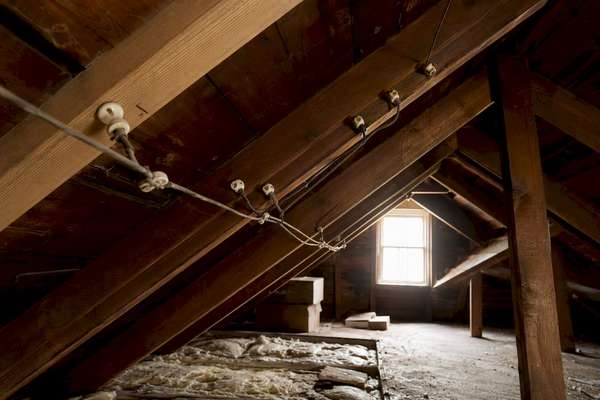
What Knob-and-Tube Wiring Is — and Why It Matters Now
Knob-and-tube was the standard way to wire homes from the 1880s through the 1940s. Two separate wires — one hot, one neutral — run through the walls and attic, held in place by porcelain knobs and passed through framing by porcelain tubes. It was a fine system for a house with a few light bulbs and a radio. It is a real problem for a house with air conditioning, a dryer, a microwave, and computers.
- No ground wire. Knob-and-tube has no equipment ground, so three-prong outlets installed on it offer no real grounding protection. We often find bootleg grounds — three-prong receptacles that look safe but aren't.
- Aging insulation. The rubber-and-cloth insulation is now decades past its intended life. It cracks, flakes, and exposes bare copper, especially where it runs hot near attic temperatures in Florida summers.
- Insurance problems. Many homeowners insurance carriers on the Treasure Coast will not write or renew a policy on a home with active knob-and-tube. Replacement is often the only way to get covered.
- It can't handle modern loads. K&T circuits were sized for lighting, not for the dozens of devices a household plugs in today. Overloaded old circuits are a common cause of overheated connections.
- It was designed to be in open air. The system depends on heat dissipating freely. When later insulation is blown or laid over it in attics and walls, that heat gets trapped — which is exactly where many Florida homes now have it.
If you have it, it needs a plan — even if nothing has gone wrong yet. A wiring evaluation tells you how much is still live, what condition it's in, and what the replacement path looks like.
How Replacement Is Done
Replacing knob-and-tube means installing modern cable on brand-new grounded circuits and permanently disconnecting the old wiring. Here's how we approach it:
- Evaluate what's there. We trace every live knob-and-tube circuit, check where it feeds, and look at the panel, the attic, and the crawlspace or walls to map the full scope before we quote anything.
- Plan new circuits. The replacement isn't just swapping wire for wire — each new circuit gets proper grounding, correct breaker sizing, and, where required, AFCI or GFCI protection per current code.
- Work from the attic and crawlspace. We fish modern cable through existing wall cavities wherever possible, working down from the attic or up from below. Good access means far less wall cutting.
- Cut only where necessary. Some openings are unavoidable — behind panels, at some switch and receptacle boxes, where fireblocking blocks the path. We keep cuts small and clean, and we coordinate on placement with you first.
- Upgrade the panel when needed. Many K&T homes still run on an original panel or fuse box. A full rewire almost always pairs with a panel upgrade so the new grounded circuits land on modern, properly sized breakers.
- Disconnect the old wiring. Once the new circuits are live and inspected, the old knob-and-tube runs are fully disconnected — never left live behind a wall.
Patching and painting the openings we make is on you or your drywall contractor — we'll tell you exactly how many and where before work starts, so you can plan for it.
What Homeowners Should Expect
- Timeline. A partial replacement — one or two circuits — can take a day or two. A full whole-house rewire typically runs several days to a couple of weeks, depending on the size of the home, access, and how much old wiring is still active.
- Power interruptions. Circuits being replaced are de-energized while we work on them. We plan the sequence so you're not without power overnight, and we coordinate which rooms go down and when.
- Patching and painting. We cut the minimum number of openings to get the new cable in, but the drywall patching, texture, and paint afterward are the homeowner's responsibility. Most people line up their painter before we start.
- Permits and inspection. Rewires are permitted electrical work. We pull the permit, do the work to current code, and have it inspected and closed out — that paperwork also helps with insurance and resale.
- A written scope first. Before any work begins, you get a clear written scope: which circuits are being replaced, whether the panel is included, how many openings we expect, and what the timeline is. No surprises mid-job.
Older Homes on the Treasure Coast — Where K&T Still Turns Up
Port St. Lucie is mostly newer construction, but Fort Pierce, Stuart, Jensen Beach, and Palm City all have neighborhoods where knob-and-tube still shows up — early-1900s bungalows, old downtown homes, and houses that were remodeled over the decades without a full rewire. It's common to find K&T feeding just a few rooms while the rest of the house is modern.
During an evaluation, here's what we check first:
- The attic — the most common place live K&T is still visible, often buried under newer insulation.
- The panel — for original fuse boxes or panels, undersized service, and double-tapped or improvised connections where old circuits were spliced.
- Receptacles and switches — ungrounded two-prong outlets, and three-prong outlets with no actual ground behind them.
- Switches and lighting circuits — lighting circuits were the last to get replaced in many remodels, so they're often the last holdout of live K&T.
- Prior splices — places where later remodels tied modern wiring into the old system, which is one of the most common hazards we find.
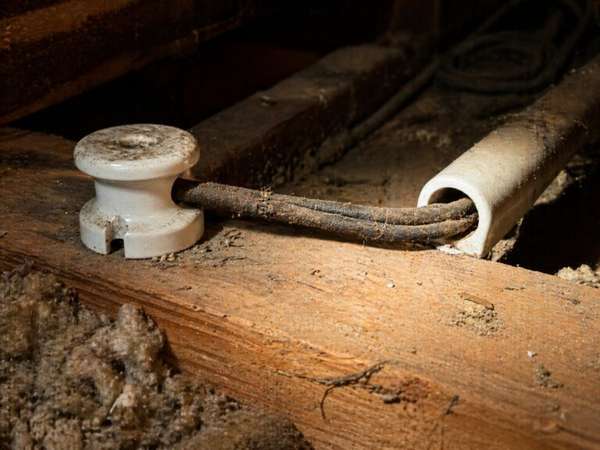
Live knob-and-tube often hides along attic joists, sometimes under layers of added insulation.
Frequently Asked Questions
How do I know if my home has knob-and-tube wiring?
Look in the attic or basement for wires running on white ceramic knobs, or porcelain tubes where wires pass through wood framing. If your outlets are two-prong, that's another strong hint. The surest way is an evaluation — we can tell you exactly how much is live and where it feeds.
Does my homeowner's insurance require me to replace it?
Many carriers do — some will refuse to write a policy on a home with active knob-and-tube, and others will require replacement within a set time after you buy. We provide documentation of the rewire and the inspection sign-off, which is what insurers and mortgage lenders ask for.
Can knob-and-tube be partially replaced, or does it have to be the whole house?
It can be done in stages — we can replace the live circuits feeding one area at a time. But insurance carriers and inspectors look for the whole picture, so if the goal is an insurable home or a permitted sale, the full active system needs to go. We'll map everything first so you know the full scope before deciding.
How long does a whole-house replacement take?
Most whole-house rewires take several days to a couple of weeks, depending on the home's size, how much of the wiring is still knob-and-tube, attic and wall access, and whether the panel needs replacing too. You'll get a timeline with your written scope — not a guess mid-job.
Will you have to tear open my walls?
Not the way you might fear. We fish modern cable through existing cavities from the attic or crawlspace, and most walls stay intact. Openings are only cut where there's no other path — and we tell you how many and where before work starts. Patching and painting the openings is the homeowner's responsibility.
Does the electrical panel need to be upgraded too?
In most cases, yes. Knob-and-tube homes usually have an original panel or fuse box that can't accept modern grounded circuits, AFCIs, or the service size a house needs today. We evaluate the panel during the same visit and include the upgrade in the plan when it's needed.
Is the old wiring removed, or just abandoned in the walls?
The old knob-and-tube conductors are fully disconnected — every live circuit is transferred to the new wiring and the old runs are cut off at the source so nothing energizes them. Where they're accessible and in the way, they're removed.
Will a replacement require a permit?
Yes — rewiring is permitted electrical work, and that's a good thing. We pull the permit, the work is inspected and signed off, and the closed permit becomes part of your home's record, which helps with insurance, appraisals, and resale.
Areas We Serve
We replace knob-and-tube wiring in older homes across these Treasure Coast communities:
- Port St. Lucie
- Fort Pierce
- Stuart
- Jensen Beach
- Palm City
Who You're Calling
- Company
- Florida Electrical and Fire Alarm LLC — the licensed company behind this site
- License
- Florida Electrical License #ER13016161
- Phone
- (561) 552-3753
- services.floridaelectrical@gmail.com
- Hours
- Monday–Saturday, 8 a.m.–5 p.m.; 24/7 emergency service
- Service area
- Port St. Lucie, Fort Pierce, Stuart, Jensen Beach & Palm City (service-area business — no walk-in location)
Learn More
Replacing knob-and-tube is part of the broader home rewiring work detailedon our main site.
Request an Estimate
Think your home might have knob-and-tube? Send us the details and we'll schedule an evaluation during regular hours. If this is urgent, call (561) 552-3753 now — don't wait on a form.